How Air Sealing Reduces HVAC Size and Energy Bills
The cheapest way to buy a smaller air conditioner is to buy a $5 tube of caulk.
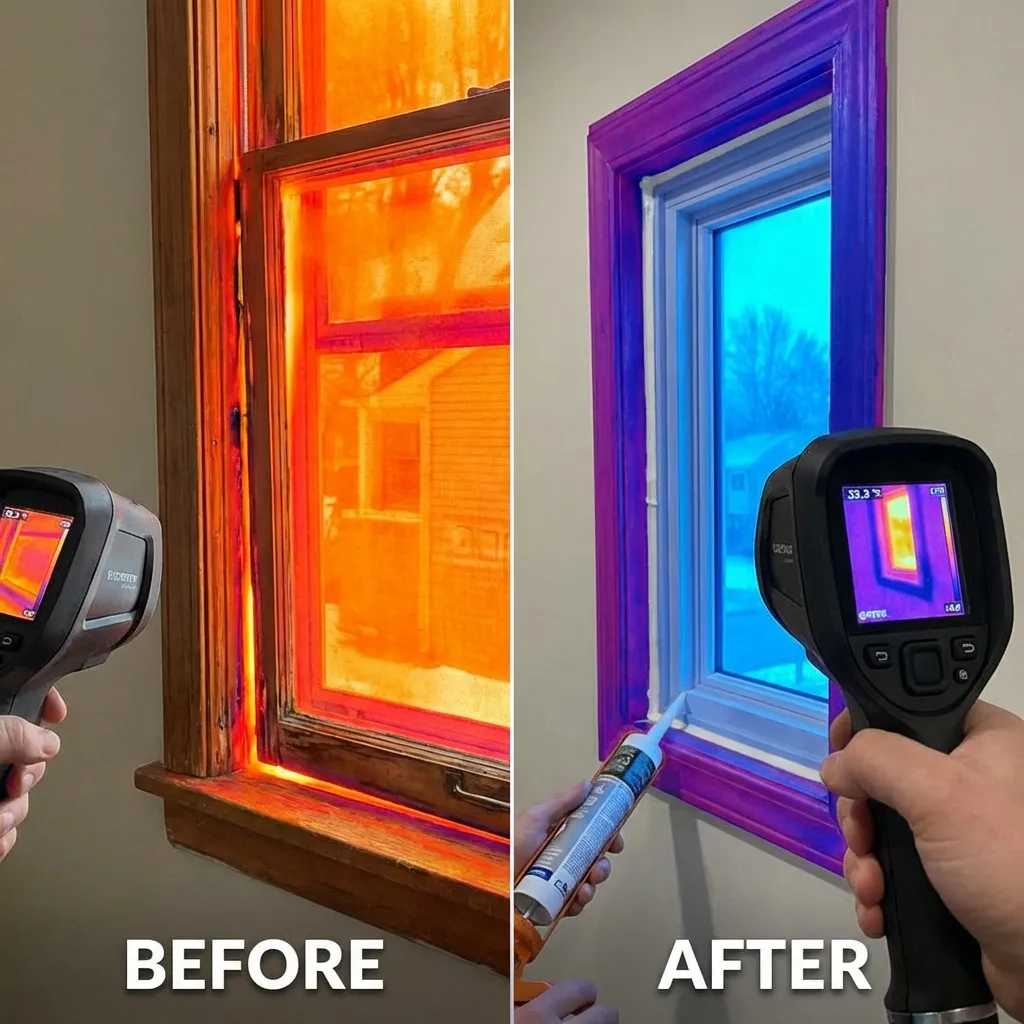
Imagine trying to fill a bucket with water while it has holes in the bottom. You can either (A) buy a bigger hose, or (B) plug the holes.
In HVAC, buying a bigger unit is the "bigger hose." It's expensive and inefficient. Air sealing reduces hvac load by plugging the holes, which is the smart way to solve the problem.
Infiltration: The Silent Load Killer
Manual J has a specific input called Infiltration, measured in Air Changes Per Hour (ACH). This represents how many times per hour the entire volume of air in your house leaks out and is replaced by hot, dirty outside air.
For an average older home, Infiltration can account for 30-40% of the entire heating/cooling load.
The Math of Leaks
SCENARIO: 2,000 sq ft home
Leaky Home (ACH 0.70)
Load: 3.5 Tons
Sealed Home (ACH 0.35)
Load: 2.5 Tons
By spending a weekend with a caulking gun and some spray foam, you can drop your requirement from a 3.5 Ton unit to a 2.5 Ton unit. That saves you ~$1,500 on the equipment purchase instantly, plus $30-$50 every month on electricity for the next 15 years.
Where to Look for Leaks
You don't need a thermal camera to find the big ones:
- Attic Hatch: The #1 offender. Heat rises and escapes right through the gap. Weatherstrip it.
- Plumbing Penetrations: Check under sinks where pipes go into the wall. Those holes often lead directly to the crawlspace or attic.
- Recessed Lights: Old "can lights" are basically chimneys for your heat.
- Door Frames: If you can see daylight, you are losing money.
Test Savings Now
Use our calculator to toggle your home's "Air Tightness" setting and watch the Tons drop.
Simulate Air Sealing