How Humidity Affects Cooling Load (Manual J Explained)
It's not the heat; it's the humidity. And it changes exactly which AC you need to buy.
Sizing an air conditioner isn't just about temperature. If you live in Arizona (Dry) you need a completely different machine than if you live in Florida (Humid), even if the temperature is exactly the same.
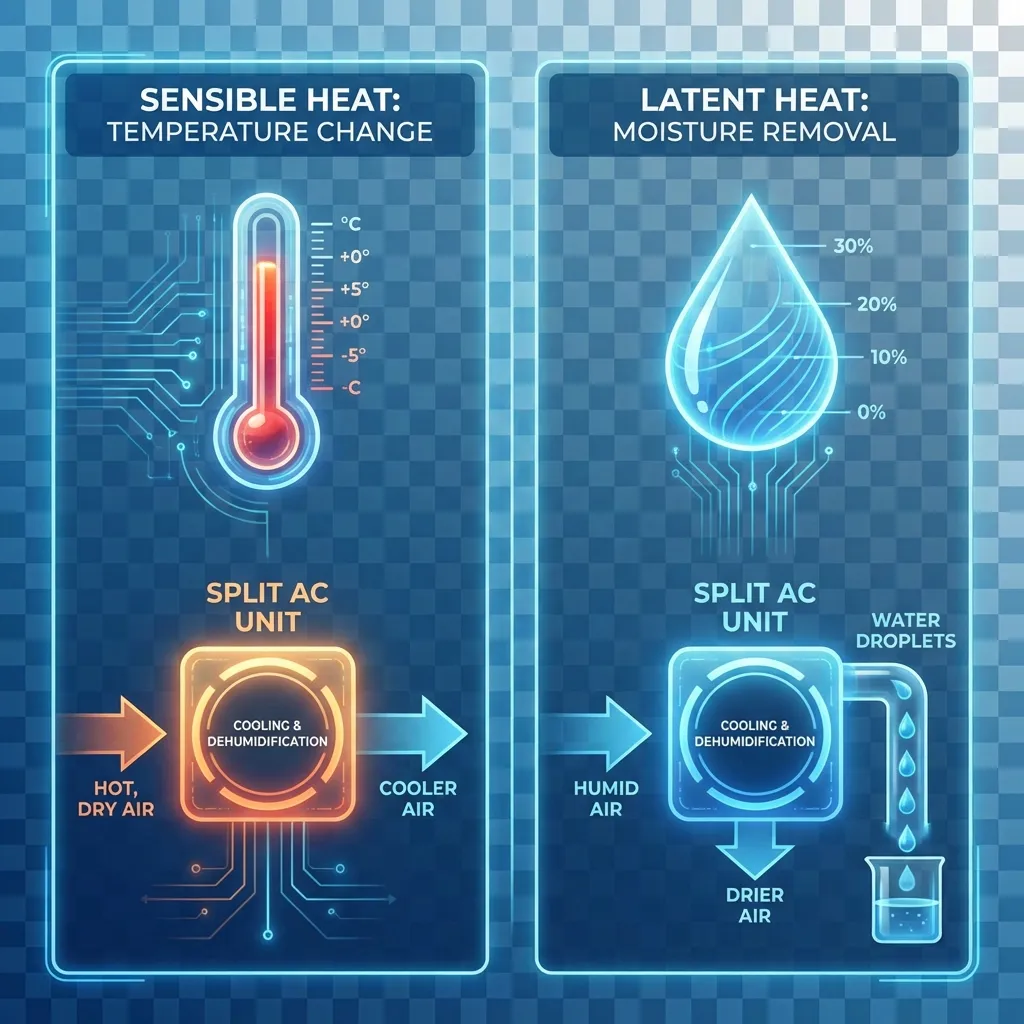
This leads us to the two types of cooling loads calculated in Manual J: Sensible Cooling and Latent Cooling.
Sensible Heat vs. Latent Heat
Sensible Load (Temperature)
This is the energy required to lower the thermometer reading. It comes from the sun, your oven, and lightbulbs.
Latent Load (Moisture)
This is the energy required to turn water vapor (humidity) into liquid water (condensate) to drain it away. It comes from showers, cooking, and sweating people.
Why Oversizing Kills Humidity Control
This is the #1 reason why hvac humidity control fails in many homes.
An AC unit dehumidifies by running cold air over a coil. Water condenses on the coil and drips away. This process takes time—usually about 10-15 minutes of running before maximum dehumidification happens.
The Scenario: You buy a giant 5-ton AC for a small house. It blasts the temperature down from 78°F to 72°F in 5 minutes flat. Then it shuts off.
The Result: The air is cold (Sensible Load met), but the unit didn't run long enough to remove the water (Latent Load ignored). You are now sitting in a cold, clammy swamp.
The Manual J Solution
A proper latent load hvac calculation tells you the "Sensible Heat Ratio" (SHR).
- Phoenix SHR (0.95): 95% of the AC's job is cooling temp, 5% is removing water.
- Tampa SHR (0.70): 70% of the AC's job is cooling temp, 30% is removing water.
If you put a Phoenix-tuned unit in Tampa, mold will grow in the walls. Manual J prevents this by forcing you to select equipment that matches your specific humidity load.
Don't Get Stuck in the Swamp
Calculate your home's sensible and latent loads individually to ensure perfect comfort.
Calculate Moisture Load