What Is a Manual J Load Calculation?
Stop guessing with your comfort. Discover why Manual J is the gold standard for residential HVAC sizing and how it saves you money.
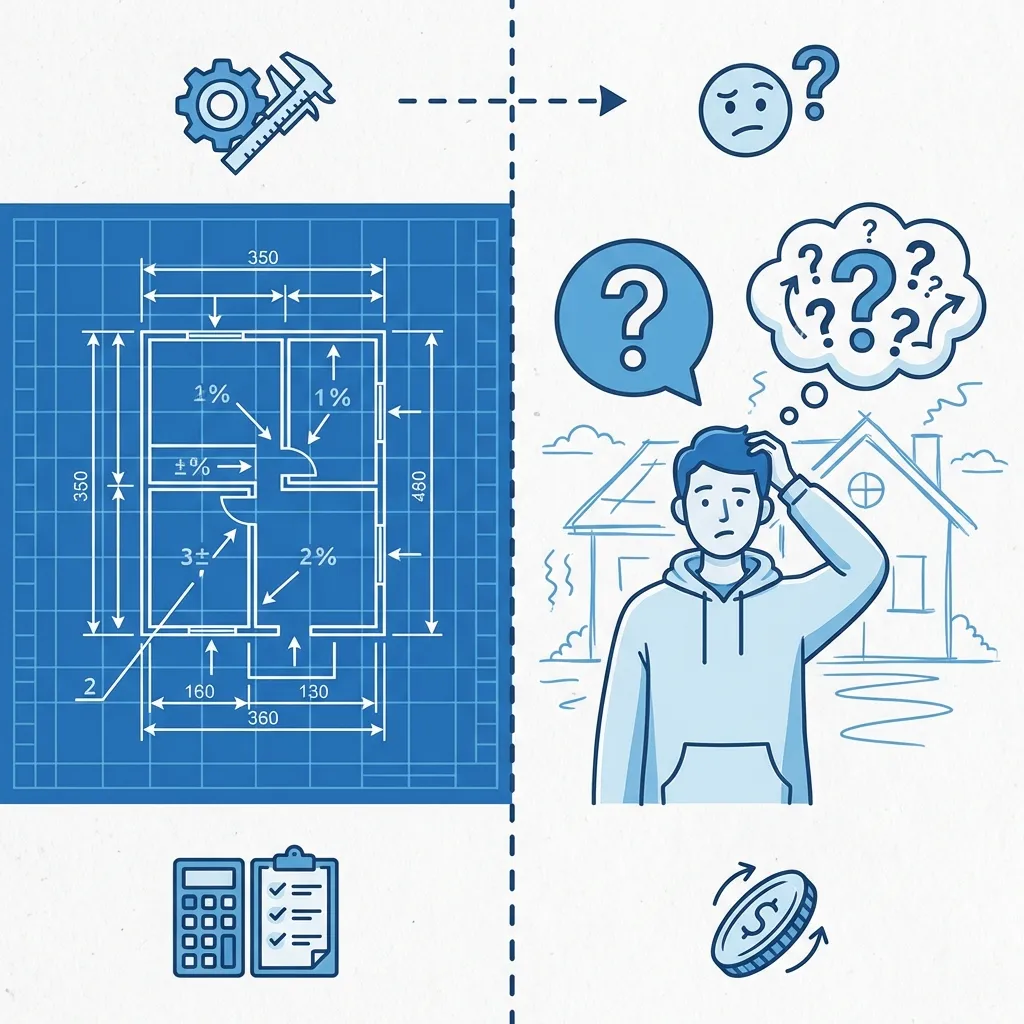
Buying an air conditioner or furnace is one of the most expensive investments a homeowner makes. Yet, surprisingly, nearly half of all new residential systems are installed incorrectly. The culprit? Skipping the "Manual J".
If you've ever walked into a room that felt clammy and freezing, or one that never quite got warm enough despite the furnace roaring, you've likely experienced the result of poor sizing. The solution to these comfort problems—and the key to energy efficiency—is a protocol called Manual J.
Don't have your numbers yet?
You can get a baseline load calculation for your specific home layout in under 2 minutes.
Run Free Manual J Calculation →So, What Is a Manual J Load Calculation?
Manual J is the official standard protocol (approved by the American National Standards Institute) for calculating the heating and cooling loads of a residential structure. Developed by the Air Conditioning Contractors of America (ACCA), it is the only method recognized by building codes and the Department of Energy for properly sizing HVAC equipment.
In simple terms: Manual J is physics, not guesswork.
It determines exactly how much heat your home loses in winter (heating load) and gains in summer (cooling load). The result is expressed in BTUs (British Thermal Units) per hour, which tells contractors exactly what size equipment—measured in "Tons"—you need.
Why "HVAC Sizing" Isn't Just About Square Footage
For decades, many contractors relied on a "Rule of Thumb," often estimating 1 ton of cooling for every 500 square feet. This hvac sizing manual j approach is dangerously outdated.
Think about it: Does a 2,000 sq ft home built in 1950 with no insulation have the same cooling needs as a 2,000 sq ft airtight modern home built in 2024? Of course not. The old house might need 4 tons, while the modern one might only need 2 tons. If you used the square footage rule, you'd massively oversize the modern home's system.
How Manual J Works: The Factors
The manual j calculation explained properly is a detailed inventory of every factor that affects your home's thermal envelope. To perform a calculation, a contractor (or our intelligent software) analyzes:
- Local Climate Data: The extreme temperatures your area experiences (e.g., Phoenix logic is different from Minneapolis logic).
- Insulation Levels: The R-value in your walls, ceilings, and floors.
- Windows & Doors: Not just the size, but the U-factor (insulation), SHGC (solar heat blockage), and—crucially—which direction they face.
- Orientation: A house with big windows facing West gets hammered by afternoon sun, driving up cooling load significantly compared to North-facing windows.
- Air Leakage: How "tight" or "drafty" the construction is.
- Occupants & Appliances: People and electronics generate body heat (internal gains) that the AC must remove.
The Risks of Skipping Manual J
You might ask, "Is it really that bad if my AC is a little too big?" The answer is a resounding yes. In the world of manual j residential design, bigger is NOT better.
1. Short Cycling & High Humidity
An oversized air conditioner cools the air too fast. It turns on, blasts the temperature down in 5 minutes, and shuts off. This is called "short cycling." The problem is that ACs need to run for long cycles (15-20 minutes) to remove humidity from the air. An oversized unit leaves you with a house that is cool but damp—the perfect recipe for mold growth and a "sticky" feeling.
2. Higher Energy Bills
Starting an HVAC motor takes far more electricity than running it. A system that constantly starts and stops wears out components faster and spikes your electric bill.
3. Comfort Issues
Oversized furnaces suffer similarly. They blast scorching hot air for a few minutes, making rooms uncomfortable, then shut off, leading to noticeable temperature swings.
"Using a standard 'Rule of Thumb' instead of Manual J is like buying shoes based on your height instead of your foot size. You might get lucky, but you'll probably end up uncomfortable."
Manual J vs. Rule of Thumb
We've written a detailed guide on this specific battle, but the summary is clear: Rules of Thumb ignore the improvements in modern building codes.
Read the full breakdown: Manual J vs Rule of Thumb →
When Do You Need a Manual J?
A manual j heating and cooling calculation is essential in three main scenarios:
- New Construction or Additions: Most building departments now require a documented Manual J report to issue a permit.
- Equipment Replacement: Don't just swap "like for like." If you've added insulation or new windows since the last unit was installed, you may be able to downsize your equipment, saving thousands on the hardware.
- Comfort Problems: If one room is always hot or humidity is high, a load calc can diagnose if the current system is the wrong size.
How to Get a Manual J Calculation
Traditionally, you'd hire a professional engineer or HVAC contractor to perform this service, which can cost $300 - $600. They perform a "block load" (whole house) or "room-by-room" load calculation.
However, for many homeowners looking for a quick check or estimate, online tools have bridged the gap. While a full permit-grade Manual J requires certified software (like Wrightsoft or CoolCalc), our hvac load calculation explained tool provides a highly accurate physics-based estimate to arm you with knowledge before you talk to a contractor.
Check Your Home's True Load
Don't let a contractor guess with your money. Get a free, instant estimate based on Manual J standards.
Start Free Calculation NowTakes less than 60 seconds