Manual J Case Study: High-Window Homes and Cooling Load Impact
Modern homes love glass, but glass hates efficiency. Here is how floor-to-ceiling windows wreck your HVAC sizing.
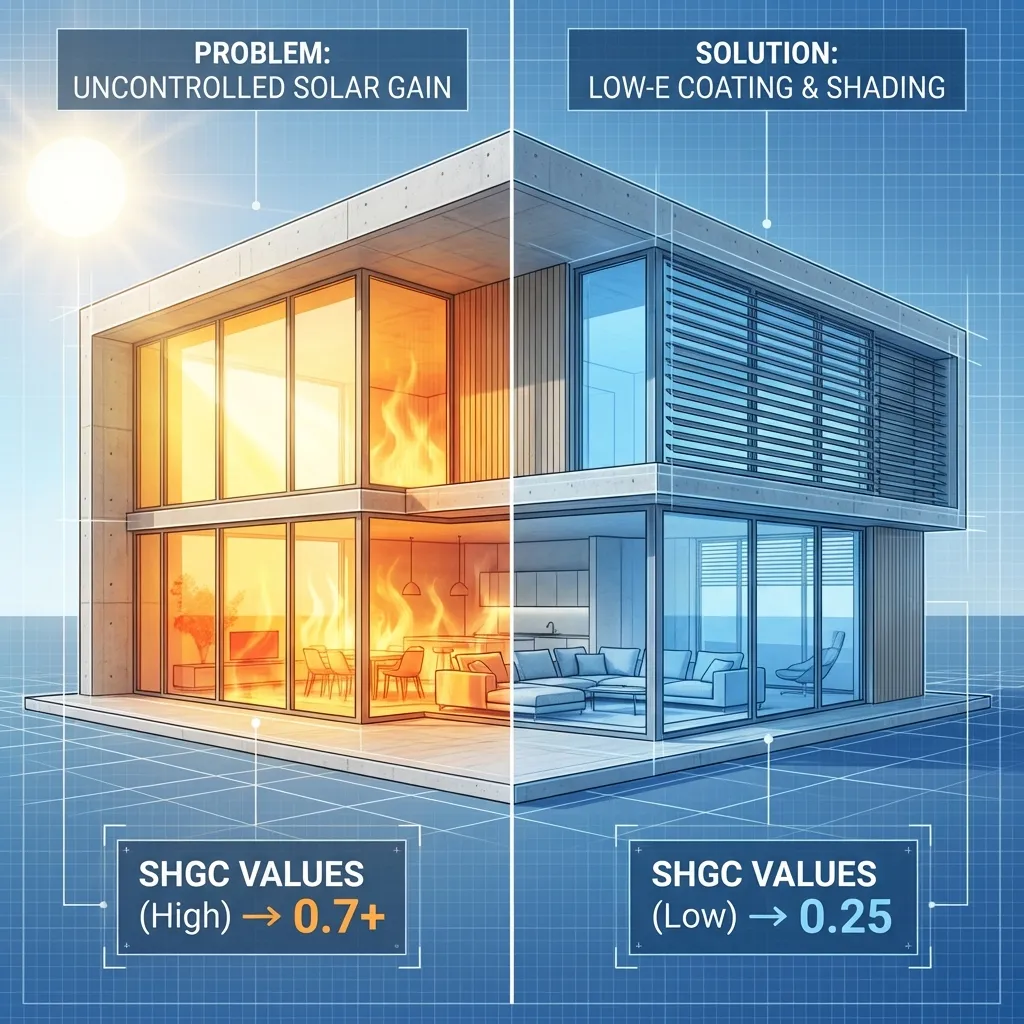
Architects love them. Homeowners love them. HVAC contractors... fear them. We're talking about the modern "Glass Box" design—homes with massive floor-to-ceiling windows.
In this windows impact hvac load case study, we'll demonstrate how glass is the single most volatile variable in cooling load calculations.
Glass: The Thermal Sinkhole
An insulated wall has an R-value of roughly R-15 to R-21. A standard double-pane window has an R-value of roughly R-3 (U-factor 0.35).
That means glass is 5 to 7 times worse at insulating than a solid wall.
But in cooling mode, it gets worse. Insulation only stops conduction (heat moving through material). Glass allows Solar Radiation to pass right through, heating up your floors and furniture like a greenhouse.
The Scenario: The West-Facing Wall
Imagine a modern living room in a hvac load large windows scenario. It has a 20-foot wide wall of glass.
Variable: Direction Matters
If that glass faces North: It receives indirect light. Load is moderate.
If that glass faces West: It receives direct, punishing afternoon sun right when the outside temperature is highest (4 PM - 6 PM). Load is massive.
Case A: Standard Double Pane (Clear Glass)
You buy standard "energy efficient" windows from Home Depot.
- U-Factor: 0.35
- SHGC (Solar Heat Gain Coefficient): 0.60 (High solar gain)
- Cooling Load Addition: ~12,000 BTUs (1 Ton)
In this scenario, window shgc cooling load is the killer. SHGC of 0.60 means 60% of the sun's heat is entering your home. That one wall requires an entire separate ton of air conditioning.
Case B: High-Performance Low-E 366 Glass
You specify high-performance glass designed for south facing windows hvac loads (or West facing).
- U-Factor: 0.28
- SHGC: 0.20 (Blocks 80% of heat)
- Cooling Load Addition: ~4,000 BTUs (0.3 Tons)
The Result: By spending a little more on the glass coating, you reduced the AC size requirement by almost 1 Ton. This saves you $2,000 in equipment costs, which likely pays for the window upgrade immediately.
Zoning: The Solution for High-Window Homes
Even with good glass, rooms with large windows will heat up and cool down much faster than the rest of the house.
If you have a "Great Room" with 20ft ceilings and glass walls, you cannot put it on the same thermostat as the bedrooms. The thermostat in the hallway will read 75°F while the Great Room is baking at 85°F.
Verdict: High-window homes almost always require Zoned HVAC systems or mini-splits to handle the specific "Solar Load" of that room without freezing out the rest of the house.
Planning a home with lots of glass?
Don't guess on the HVAC. Input your window area and SHGC to see exactly how many tons you need.
Calculate Load Now