Manual J for Central AC vs Heat Pumps: Key Differences
Sizing a heat pump is much harder than sizing an AC. Here is why the math changes when you switch to electric heating.
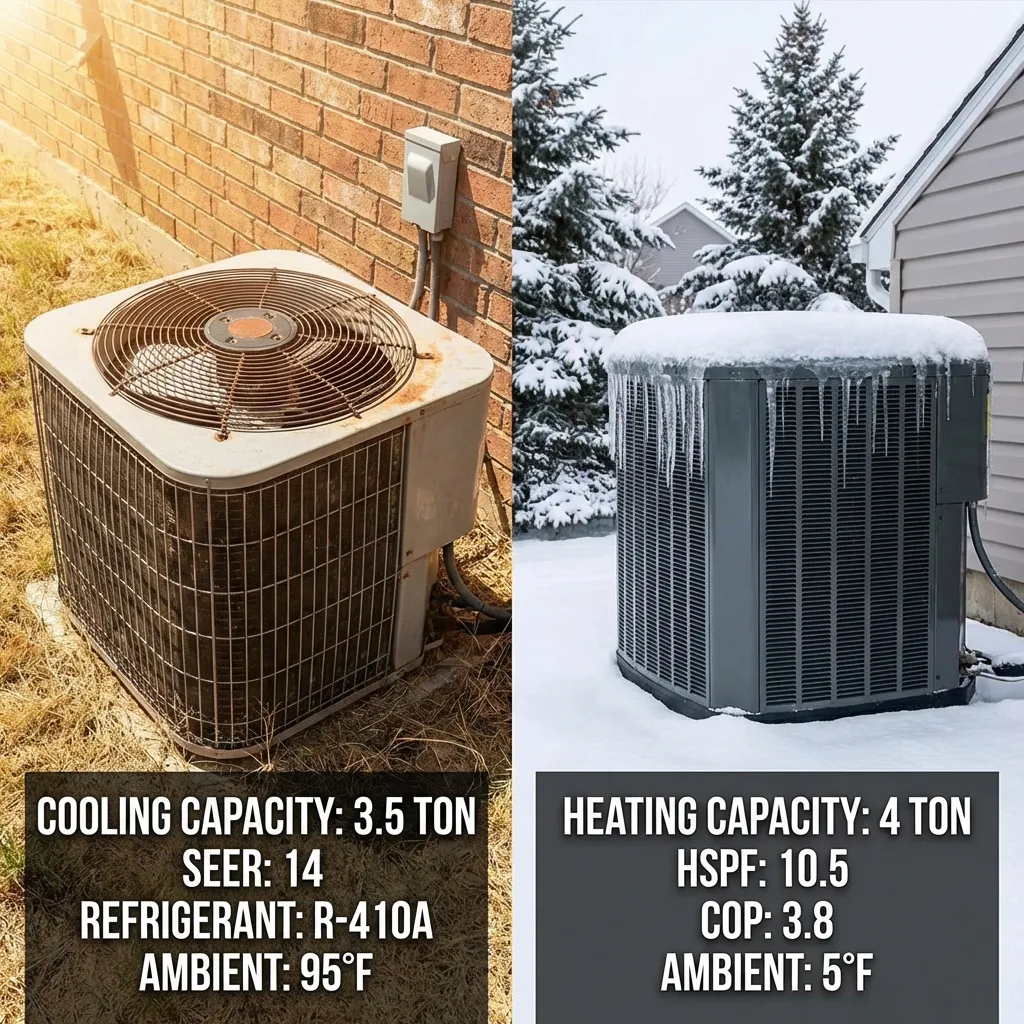
For 50 years, sizing an HVAC system was easy: standard gas furnace + standard AC. The furnace was huge (80k BTUs), and the AC was just "big enough."
But with the explosion of manual j heat pump vs ac conversions, contractors are finding that their old "rules of thumb" are causing expensive problems.
Different Goals, Different Math
When you size a Central AC, you are primarily worried about Cooling Load. You want enough power to keep the house 75°F when it's 95°F outside.
When you size a Heat Pump, you have to worry about TWO loads:
- Cooling Load (Summer)
- Heating Load (Winter)
The problem? In many climates, the Heating Load is much higher than the Cooling Load.
The "Balance Point" Problem
Heat pumps lose capacity as it gets colder outside. A "3-Ton" heat pump provides 36,000 BTUs of cooling at 95°F. But at 17°F in winter, that same unit might only provide 18,000 BTUs of heat.
This determines your Thermal Balance Point—the outdoor temperature where the heat pump runs non-stop to keep up with the heat loss. Below this point, you need "Auxiliary Heat" (heat strips), which are expensive to run.
Why Oversizing is dangerous for Heat Pumps
You might think, "I'll just get a 5-ton heat pump to handle the winter!"
The Catch: A 5-ton unit in summer will create a wind tunnel in your ducts, short-cycle, and fail to remove humidity. Your house will feel like a cold swamp.
How Manual J Solves This
A proper heat pump sizing manual j calculation tells you exactly where the lines cross.
- It calculates the precise Heating BTUs needed at your winter design temp.
- It allows you to select a unit (Manual S) that matches the Cooling Load perfectly, while covering as much Heating Load as possible.
- It tells you exactly how much Backup Heat (kW) you need to install so you don't freeze.
Switching to a Heat Pump?
Don't rely on your old AC size. Calculate your winter heating needs now.
Calculate Heating Load