How Windows Affect HVAC Load (SHGC, U-Factor & Orientation)
They provide a view, but they also act as giant radiators. Understand the physics of glass in your Manual J calculation.
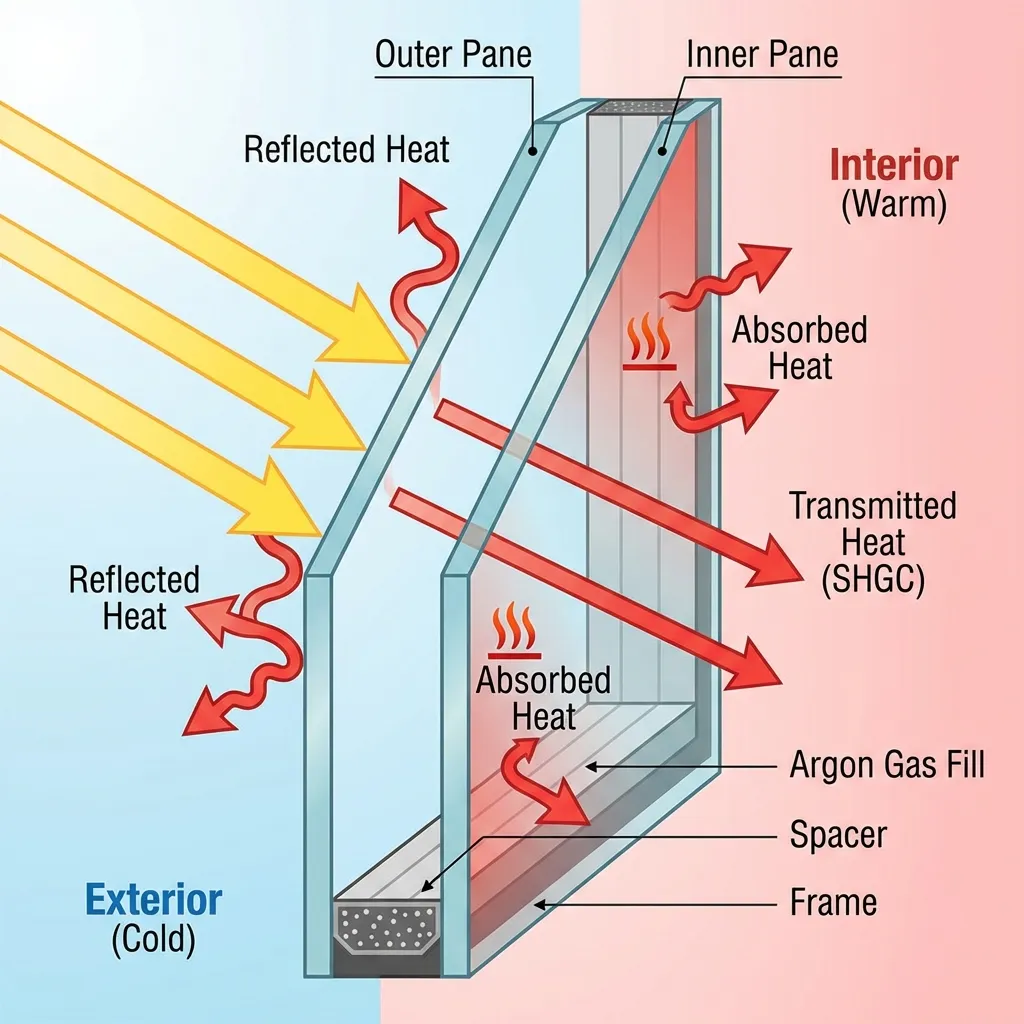
In terms of energy efficiency, a window is essentially a "thermal hole" in your wall. Even the best window is 10 times less efficient than a solid wall.
When calculating how windows affect hvac load, we aren't just looking at the size of the glass. We have to analyze two critical ratings: U-Factor and SHGC.
West-Facing Glass?
A single West-facing window can add as much heat as an entire room.
Calculate Solar Gain →The Two Ratings: U-Factor vs. SHGC
If you look at the NFRC sticker on a new window, you'll see these two numbers. They affect hvac load calculation windows differently.
1. U-Factor (Conductive Heat Transfer)
This measures how well the window insulates.
- Low U-Factor (e.g., 0.25) is good. It keeps heat inside during winter.
- High U-Factor (e.g., 1.20) is bad. This is single-pane glass.
- Window u factor manual j impact: Crucial for Heating Load in cold climates.
2. SHGC (Solar Heat Gain Coefficient)
This measures how much solar radiation passes through the glass.
- SHGC 0.75 (Clear Glass): 75% of the sun's heat comes in.
- SHGC 0.25 (Low-E Glass): Only 25% of heat enters.
- Window shgc hvac impact: Crucial for Cooling Load in hot climates.
The "Greenhouse Effect" on your AC
Solar heat is different from ambient heat. It travels as radiation, passes through the glass, hits your carpet/furniture, and turns into heat. This heat is trapped inside.
Replacing old clear glass with low e windows hvac sizing can drop your cooling load by 20-30%, potentially allowing you to buy a smaller air conditioner.
Why Orientation is Critical
Not all windows are created equal. In the Northern Hemisphere, the sun's path makes window orientation cooling load vary wildly.
The West vs North Rule
North Facing: Gets almost no direct sunlight. Acts as a shade. Low cooling load.
West Facing: Gets pounded by the low afternoon sun right at the hottest part of the day
(4 PM - 7 PM).
A 50 sq ft window facing West adds 3x more load than the same window facing North.
This is why our calculator asks you to input window area by direction. If you just sum them all up, you miss the peak load spike caused by the Western exposure.
Do Curtains and Blinds Help?
Homeowners often ask if white blinds count as "shading."
Verdict: Only slightly.
Once the heat is inside the glass, it's inside the house. Blinds might reflect some back out, but the glass itself gets hot and radiates heat inward. Exterior shading (solar screens, awnings, trees) is 5x more effective than interior blinds.
Beyond the Glass: Air Leaks
Windows are also a common source of infiltration—air leaking in around the frame. This isn't reliable solar gain; it's uncontrolled draftiness.
Read Next: Air Leakage, ACH, and HVAC Load →
Account for Your Windows Correctly
Use our Advanced Mode to input North, South, East, and West window areas separately for precision.
Start Advanced Calculation