How Insulation Affects Heating and Cooling Load
The secret to a smaller, cheaper air conditioner might be in your attic. Here is the math behind insulation R-values.
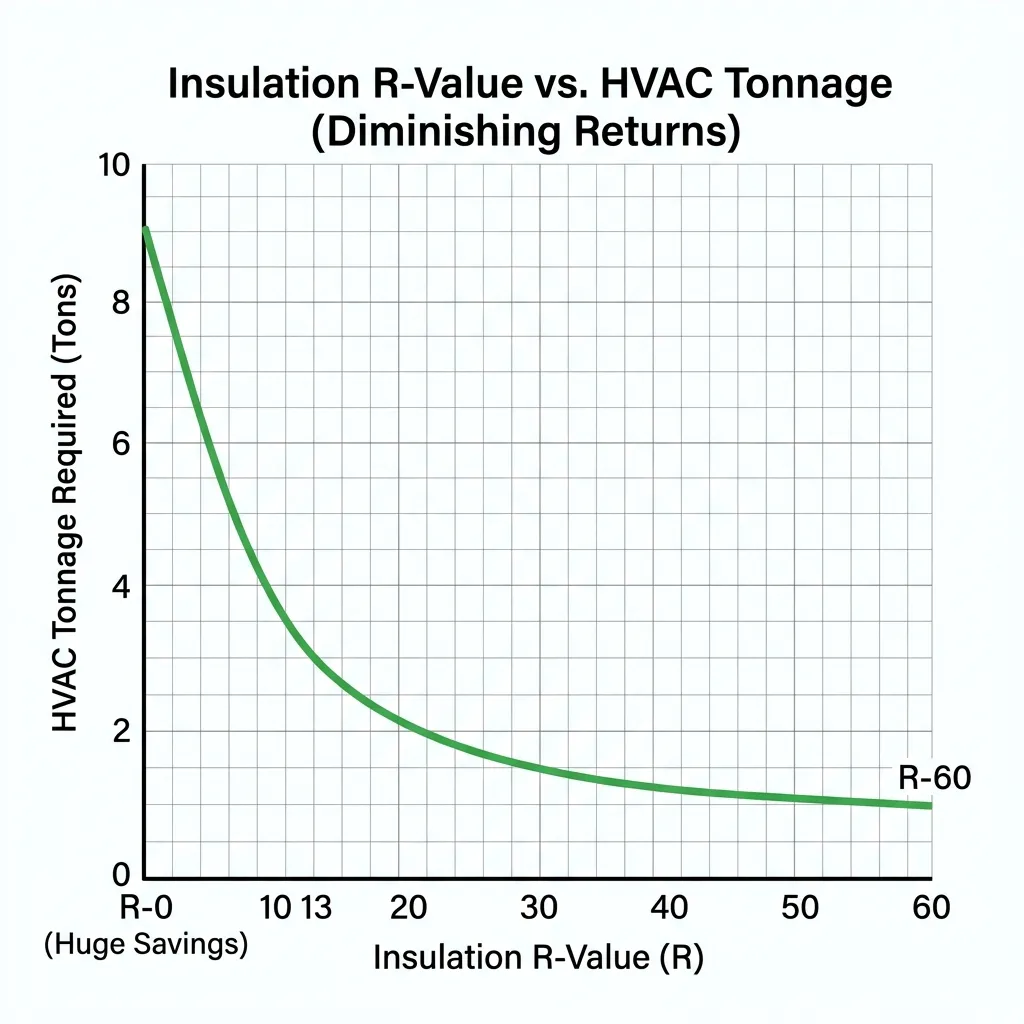
When people think about upgrading their comfort, they usually think about buying a new machine. "I need a bigger AC," they say.
But in HVAC design, the equipment is just the engine. The house is the car body. If the car has holes in it (poor insulation), it doesn't matter how big the engine is—you're going to lose performance. Understanding how insulation affects hvac load is the key to downsizing your system and saving thousands.
Simulate an Insulation Upgrade
Run our calculator with "Poor" insulation, then run it again with "Good." You might be shocked at the difference.
Run Scenarios Now →What is R-Value?
Insulation R value hvac load calculations are based on thermal resistance.
R-Value measures how well a material stops heat from passing through it.
- R-1: Single pane of glass (Terrible).
- R-13: Standard 2x4 wall insulation.
- R-38: Standard modern attic insulation (about 12-14 inches of fiberglass).
The higher the number, the harder it is for heat to enter in summer or leave in winter.
The Attic: Your Biggest Opportunity
The sun beats down on your roof all day. In summer, attic temperatures can reach 140°F. If you have thin attic insulation cooling load spikes massively because that 140°F heat radiates right through your ceiling drywall into your living room.
Scenario: Upgrading from R-11 (3 inches of old fluff) to R-49 (blow-in cellulose) in a
2,000 sq ft house.
Result: You could reduce your cooling load by ~6,000 BTUs (half a ton).
Walls and "Thermal Bridging"
Wall insulation heating load impact is significant in cold climates. An uninsulated 2x4 wall acts like a radiator sucking heat out of your house.
Even if you have insulation, the wood studs themselves conduct heat (thermal bridging). Manual J takes this into account, giving a "weighted average" U-value for the whole wall assembly.
Can Adding Insulation Reduce HVAC Size?
Yes. This is the smartest financial move you can make.
Let's say you need a new AC. Your Manual J says you need 3.5 Tons.
A 3.5 Ton system costs ~$8,000.
If you spend $1,500 reduce hvac size with insulation upgrades in the attic first, you might drop your load to 2.8 Tons. Now you can install a 3.0 Ton unit.
You save money on the equipment, and you save money on electric bills every single month forever.
What About Windows?
Insulation stops heat transfer through solid surfaces (conduction). But glass is different—it lets solar radiation pass right through it.
Read Next: How Windows Affect HVAC Load (SHGC & Orientation) →
Check Your Home's Efficiency
Input your insulation levels into our calculator to see if your current system is oversized.
Start Calculation